Two of Yorkshire Air Ambulance’s most experienced pilots have each achieved an exceptional aviation milestone, surpassing 6,000 flying hours each, a landmark rarely reached within Helicopter Emergency Medical Service (HEMS) operations.
Chief Pilot Owen McTeggart and Pilot Training Captain Garry Brasher have reached the career total following decades of service, thousands of challenging landings, and a commitment to delivering safe, expert flying for patients across Yorkshire. Between them, the two pilots have accumulated more than 58 years of operational flying experience across military, police and air ambulance aviation.
Both pilots began their aviation careers in the British Army, where they trained together as military helicopter pilots between 1996-1997 at the Army School of Aviation, Middle Wallop, Hampshire, then serving operationally across the globe, before leaving the forces and building extensive civilian flying experience.
Garry went on to fly with PremiAir Aviation, supporting the police, and within the UK air ambulance sector before joining Yorkshire Air Ambulance 13 years ago, making him the charity’s longest-serving pilot. Owen initially began flying for Yorkshire Air Ambulance in 2012 before his career took him elsewhere within the air ambulance sector, later returning to the charity seven years ago and reuniting the two pilots once again.
Reaching 6,000 flying hours is significant in any aviation role, but it is particularly notable within HEMS operations. Unlike commercial aviation, where flights can last several hours, air ambulance pilots typically carry out numerous short, high-intensity sorties each day, often involving confined landing sites, unpredictable weather conditions and time-critical decision-making. Each hour represents sustained concentration, judgement and hands-on operational experience, making the milestone a clear measure of both skill and consistency.
Today, Owen and Garry’s experience plays a vital role beyond the cockpit. As Chief Pilot and Training Captain, they are responsible for mentoring and developing Yorkshire Air Ambulance’s team of pilot and technical crew members, maintaining rigorous training standards and embedding best practice across the service, helping to ensure the charity continues to deliver the highest levels of aviation safety for every mission.
Over the course of their careers at Yorkshire Air Ambulance, both pilots have flown hundreds of missions supporting patients in towns, cities and rural communities across the region.
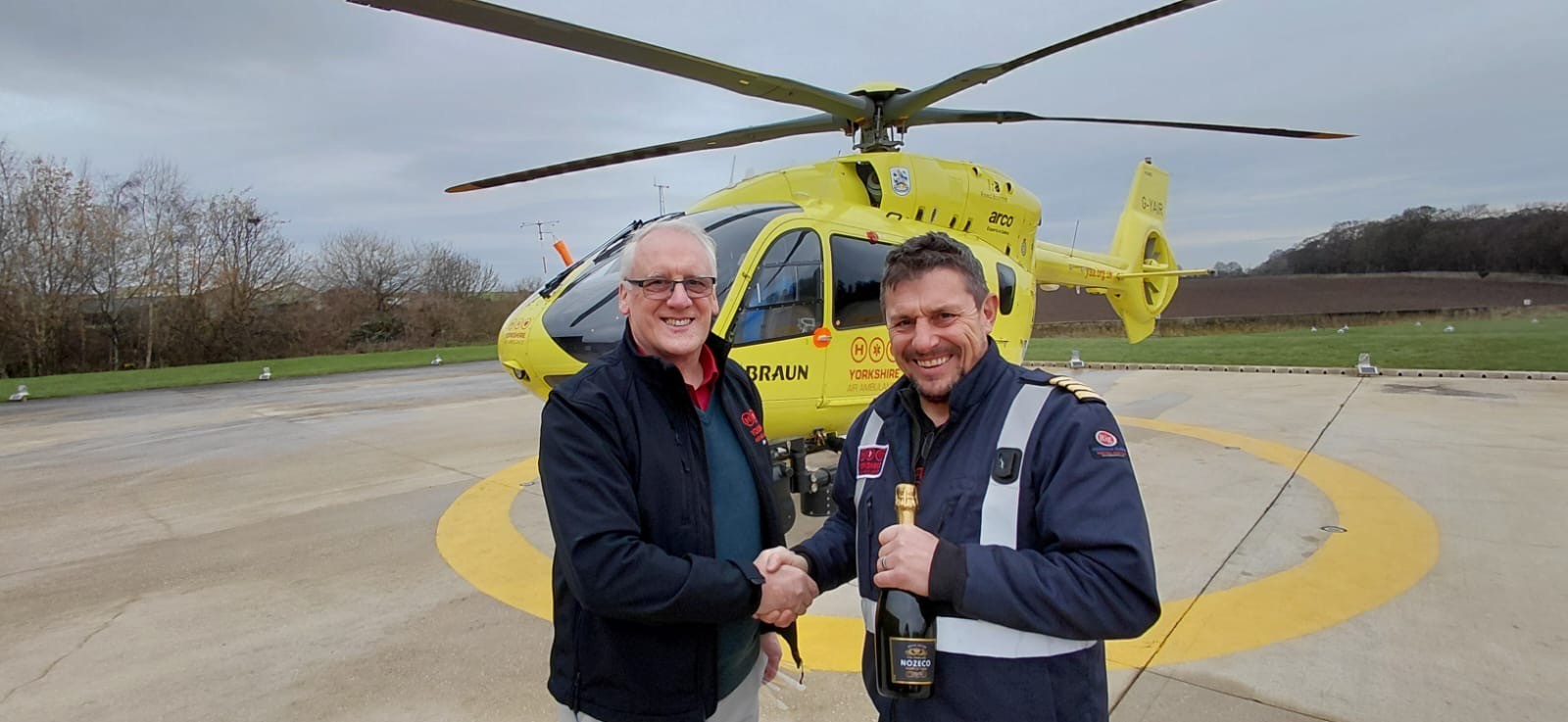
The achievement was marked at the charity’s Nostell Air Base, where both pilots were congratulated with a bottle of champagne by Yorkshire Air Ambulance’s Director of Aviation, Steve Wardby. He said, “Reaching 6,000 flying hours in a HEMS environment is an outstanding achievement and reflects the professionalism, judgement and commitment Owen and Garry bring to the role every day. Their experience strengthens our entire aviation operation and directly contributes to the safe, reliable service our patients rely on.”
Reflecting on his milestone, Pilot Training Captain Garry Brasher said, “I genuinely love flying for Yorkshire Air Ambulance, so reaching this point in my career feels incredibly special. HEMS flying gives you opportunities you simply wouldn’t experience elsewhere, from landing in places you’d never reach in any other type of flying to operating a fantastic aircraft, all while knowing that every flight has a clear purpose and a real impact for patients across Yorkshire. Just as important to me is working with other pilots, helping to build confidence and share experience so we continue to grow as a strong, capable team.”
Chief Pilot Owen McTeggart added, “Six thousand flying hours is something I’m very proud of, particularly knowing how hands-on air ambulance flying is. Every flight brings different challenges, and that keeps you focused and learning throughout your career. As Chief Pilot, being able to use that experience to support our crews, maintain high standards and ensure every mission is flown as safely as possible for our patients is something I take great pride in.”
Looking ahead, both pilots say their focus remains on maintaining the highest standards of safe flying. While a distant milestone of 8,760 flying hours, the equivalent of one full year spent airborne, remains their next theoretical target, both agree that continuing to fly safely and supporting the development of future pilots is their priority.