100 years since RHS introduced Meconopsis to the British public, Charity warns climate change could threaten one of the country’s most elusive flowers
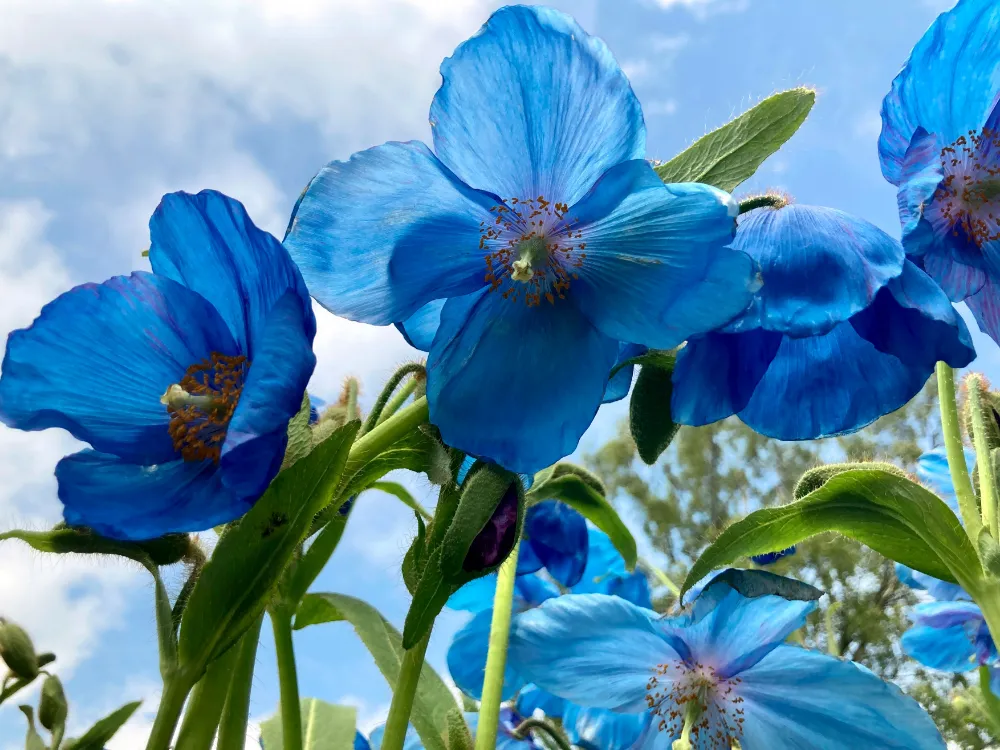
The first blooms of the rare Himalayan blue poppy (Meconopsis) have begun to emerge at RHS Garden Harlow Carr, offering visitors a fleeting chance to see one of the UK’s most elusive flowers at their best — despite the recent spell of unusually hot weather putting these notoriously delicate plants under pressure.
Rarely seen in full bloom outside a handful of specialist gardens, Himalayan blue poppies are among the most challenging plants to grow in the UK, thriving only in cool, moist conditions. These striking blooms appear for a brief window from mid-May into June, with the Royal Horticultural Society (RHS) urging visitors to catch them while they can.
But while the flowers are beginning to open, the recent heatwave has highlighted just how vulnerable these plants are to rising temperatures. As the UK experiences warmer springs and hotter, drier summers, the RHS warns that conditions favourable for Himalayan blue poppies may become increasingly rare.
As this year marks 100 years since the RHS first introduced the Himalayan blue poppy to the British public at the RHS Chelsea Flower Show in 1926, known then as The Great Spring Show, the gardening charity says the future of these much-loved blooms is now under increasing pressure from climate change.
RHS horticulturalist Aimee-Beth Browning cares for the Meconopsis collection at RHS Garden Harlow Carr, which can be spotted along the Streamside and Peat Terraces.
Aimee-Beth said:
The first blooms are beginning to open, and they’re always a special sight — but they don’t last long, so it’s a case of seeing them while you can.
Cool, damp conditions are exactly what these plants need to produce their striking saucer-shaped flowers, so periods of hot, dry weather can quickly put them under stress.
Even a short spell of heat or drying winds can cause damage, and those conditions are becoming more common.
Native to the high-altitude regions of the Himalayas, Meconopsis thrive in thin air, cool temperatures and constant moisture. Their delicate, papery petals and vivid blue colouring make them highly prized, but also highly vulnerable to heat, drought and strong sun.
While Himalayan blue poppies can be found in a handful of specialist gardens across the UK — particularly in Scotland and the Lake District — RHS Garden Harlow Carr remains one of the most reliable places in England to see them, thanks to its uniquely cool, moist microclimate.
Among the earliest to flower is Meconopsis ‘Mophead’, which takes advantage of cooler spring temperatures before summer heat arrives. However, even in Yorkshire, the RHS says the plants are becoming more difficult to maintain year on year as conditions shift.
Aimee-Beth said:
These are plants that depend on consistency — cool summers, moist soil and shelter.
As weather patterns become more extreme and less predictable, it makes growing them successfully much more of a challenge.
Unlike many other planting schemes, the Meconopsis displays at RHS Garden Harlow Carr rely entirely on natural rainfall, without in-bed irrigation, making them particularly sensitive to changing weather patterns.
First recorded in 1913 in eastern Tibet and introduced to British audiences by the RHS in 1926, the Himalayan blue poppy has long been a symbol of rarity, beauty and perseverance. Today, its brief but brilliant display continues to draw visitors — but with climate pressures mounting, the RHS warns these moments may become harder to guarantee in future.
Visitors can see the first blue poppies coming into bloom now at RHS Garden Harlow Carr, with peak flowering expected over the coming weeks. By the time the garden’s Summer Garden Weekend takes place from 19–21 June, the Meconopsis display may be drawing to a close, but visitors can expect the garden’s famous Harlow Carr Hybrid candelabra primulas to be putting on a spectacular show around the Streamside and Woodland areas. The seasonal celebration will also feature expert talks, live demonstrations, specialist nurseries and summer gardening inspiration throughout the weekend.