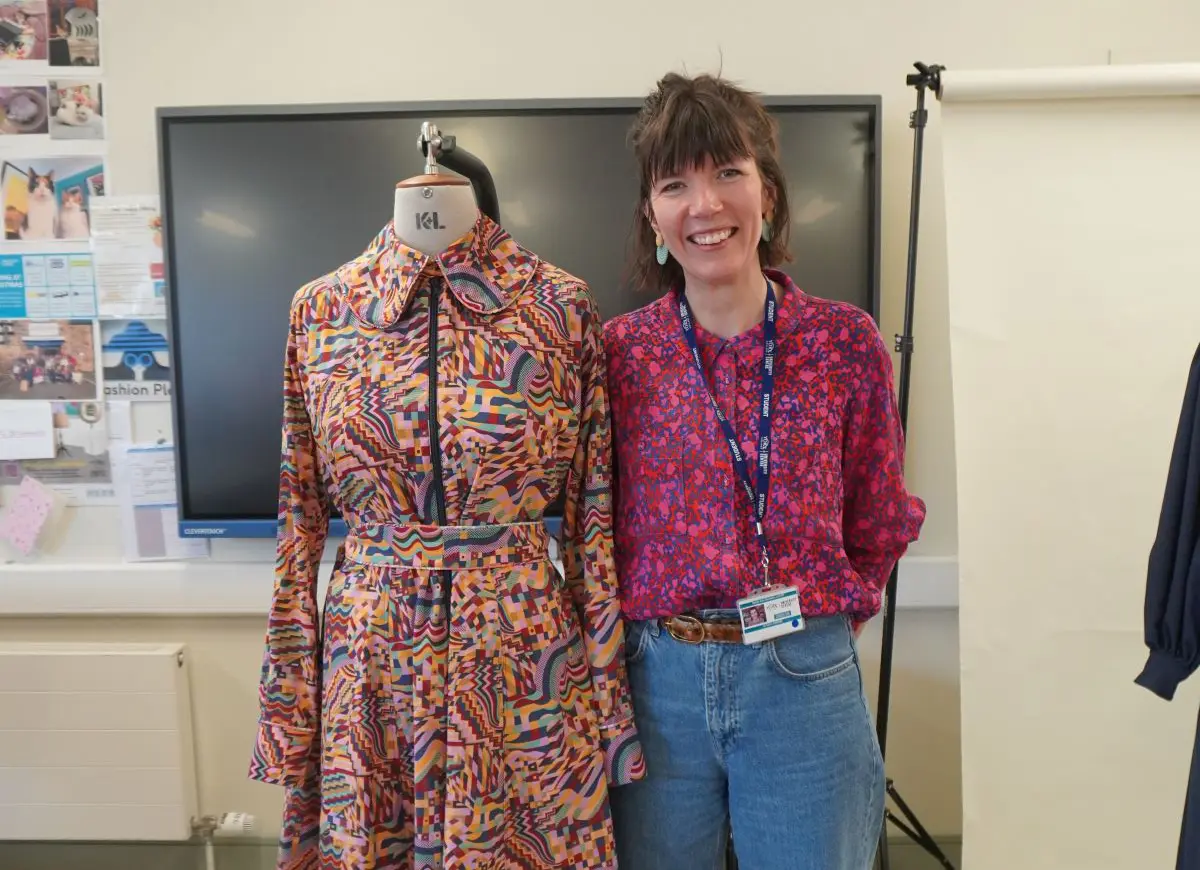
The mother of a young model who sadly died from brain cancer at the age of 24 has been left “gobsmacked” by the quality of treatment-friendly clothing designed by degree-level students from York College.
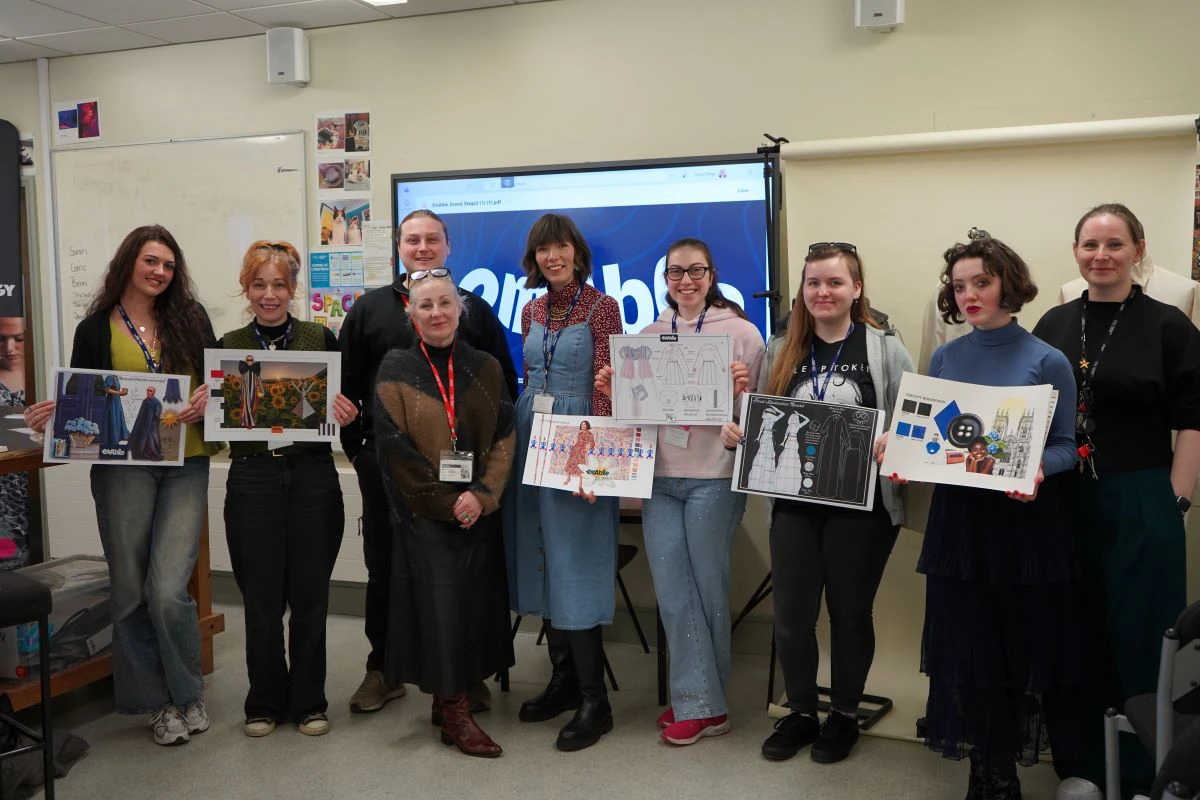
A range of dress shirts has been produced in the memory of Emily Rhodes by the first-year BA (Hons) Fashion Design and Garment Technology undergraduates in collaboration with fashion brand EmAble.
York-based company EmAble was launched by the family of Emily, who passed away in 2019 having grown up in the Monkton Road area of York.
The business was inspired by Emily’s struggle to find items of clothing that were suitable, comfortable and accessible, whilst also preserving her dignity, when she was receiving treatment for her illness.
Emily’s mum Joanne Nicholson and brother Matthew are EmAble’s co-founders and tasked learners on the college’s York School of Art course to create garments that would ease the anxiety, rather than add to it, for patients who find themselves in a similar situation when attending hospital appointments.
The students were given a brief to consider adaptable methods of countering the physical and psychological challenges faced by people receiving treatment, including restricted movement, sensitivity to fabrics, the need for easy access during medical procedures and changes in body shape.
Rather than just being purely functional, the clothing also aims to place an emphasis on aesthetic beauty that reflects an individual’s personality.
On how impressed she was with the finished garments after attending a presentation by the students on campus, Joanne said:
During Emily’s treatment, we were buying more clothes every other week as she put a lot of weight on very quickly and her body was really sore. We were going to Primark and getting oversized leggings but there was nothing out there that she felt comfortable in.
She needed something that she could throw on, feel comfortable in and not really take off. It needed to be something accessible so she could take some control back.
When you’re going through treatment, you’re losing your identity and you’re not in control of your life or your body anymore. Taking a bit of control back is a massive thing especially when you’re young and developing as a person and the students have come at it with a different perspective to me.
What they have come up with is absolutely unbelievable. I’m gobsmacked!
We’re not designers or fashion gurus, but these guys are. They’ve got really good ideas.
They’ve made items that are purposefully designed. It’s like a trainer; it has to be good. You wear it because you want to run, not just because it looks nice. It’s about function first and foremost.
We have more people being diagnosed with illness and chronic disease than ever before because the NHS are getting better at diagnosing people who are younger, but more inclusive clothes are needed. You need to be able to go and buy something that will help you while you have your treatments.
Explaining the motivation behind her design and the value of the collaboration, student Beth Warriner added:
I felt very empathetic towards Emily’s story. Joanne and Matthew talked about how Emily’s weight fluctuated during treatment, so I wanted to create something that could be adaptable in terms of size.
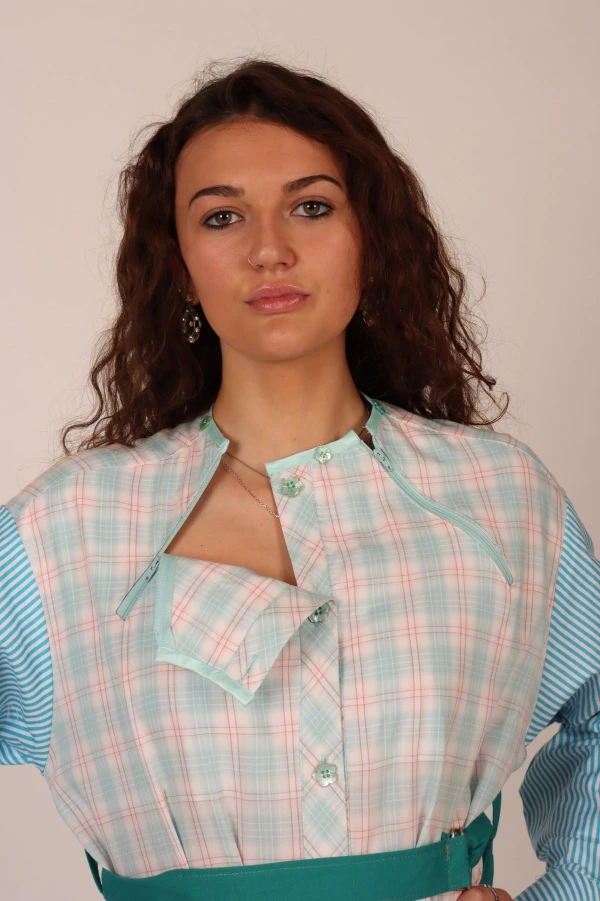
Because the belt is a D-ring, you can have it any size you want or take it off completely and I went for the approach of creating something where you could access the chest area.
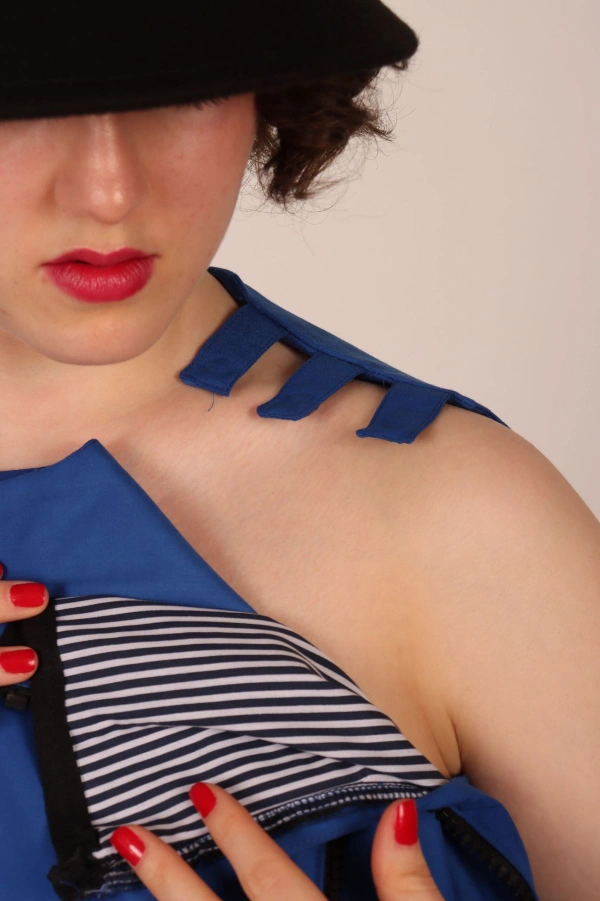
Because of MRI machines, I didn’t want to use any metal aside from on the belt which you can take off before you go in. The collar on my garment is detachable, too, and you can pull the zips down. There is also a button so you can have half and half. I used zips on the sleeves, as well, and made it so the sleeves could be rolled up with a fastening to keep them in place.
It’s been so nice to work on something that is for a good cause. Normally, people think of fashion as being high-end but this is more practical day-to-day wear. I’ve seen the importance of why we make clothes and what they are for, instead of it being just something for a catalogue.
Another student Sarah Summer said:
I hope wearing my design can be something that someone can feel positive in and cheer them up.
On how the partnership has equipped the undergraduates with skills that will be applicable across the industry, meanwhile, a third learner Carrie Slater pointed out:
This project has been so important in that it has taught us how to make clothes adaptable.