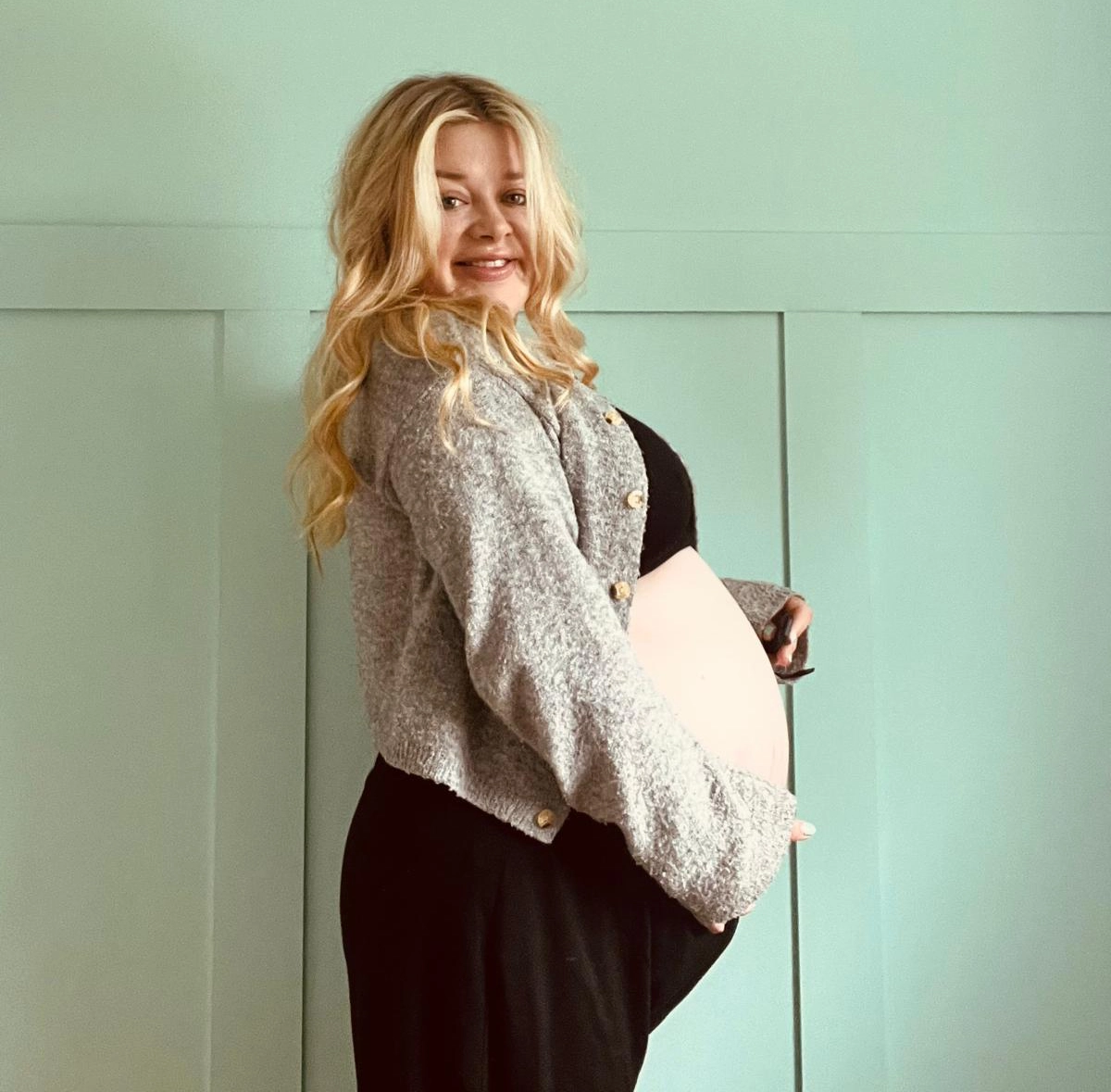
A neurodivergent mum from Harrogate who spent nine months feeling trapped and overwhelmed inside her changing body, terrified for her unborn baby and struggling with “permanent anxiety”, is sharing her experience publicly for the first time as part of a new drive from Cocoon Healthcare, calling for greater awareness of neurodivergent motherhood and more adaptive maternity care. After an emergency c-section, Ella Smith-Dunn then struggled to bond with her newborn and remembers looking at her crying baby just two weeks later and asking her husband, “What have I done?”.
Ella Smith-Dunn, 29, from Harrogate, says pregnancy left her battling intense sensory overload, repeatedly questioning whether her baby was safe, and frightened she would be unable to advocate for herself during birth. After daughter Gianna, now one-year-old, was delivered by emergency c-section, Ella found early motherhood equally overwhelming as she struggled with bonding, breastfeeding and the expectation that becoming a mother should produce an immediate rush of love.
Ella said:
There was no ‘pregnancy glow’ for me, I lived in permanent anxiety the whole time. Pregnancy was this intense overwhelm because all these things were happening inside my body and there was no escape from it for nine months. I was hot, sick and exhausted, I didn’t want to be touched and I felt completely overstimulated by my own body. Then I’d become anxious about the fact I was anxious, because you hear that stress isn’t good for the baby, so everything would go round and round in my head. I was anxious that I shouldn’t be anxious, which obviously just made me even more anxious.
Ella, who works in HR, began recognising her own neurodivergence after a family member was diagnosed as autistic in adulthood, prompting her to research patterns she had experienced throughout her life. She subsequently completed a Do-IT Profiler which identified traits associated with ADHD alongside dyscalculia, but says when she entered the pathway for formal assessment around two years ago, she was told the wait could be approximately 15 years.
Ella said:
It explained so much about me. My loved ones used to call me ‘Half-a-job Ella’ because I’d constantly start something and not finish it, I’d write an entire university essay and hand it in without reading it back, and I’d always struggled with numbers. With such a long wait for an assessment, I decided I couldn’t spend years waiting for somebody to give me permission to understand myself, so I started learning how to work with my brain rather than constantly against it.
Pregnancy, however, brought an entirely new level of uncertainty. Ella, who also has polycystic ovary syndrome (PCOS), hyperfocused on researching pregnancy in an attempt to prepare for every possible outcome, while severe sickness, exhaustion and sensory overload left her feeling increasingly overwhelmed.
The first trimester was particularly frightening because Ella could neither see nor feel what was happening inside her womb, leading her to repeatedly take pregnancy tests simply to reassure herself that she really was pregnant.
Ella said:
My brain was constantly asking, ‘Is it real? Are they okay? Did I imagine it? Did I dream it?’. I catastrophised about every possible scenario and ran through every outcome in my head. Having a plan normally helps me feel in control, so I learnt everything I possibly could, but sometimes knowing every possible outcome just gave my anxiety more things to latch onto.
Although Ella felt looked after within NHS maternity care, she realised she needed additional support around how her neurodivergence was affecting pregnancy. Unable to face waiting until her routine 12-week scan for reassurance, she found Harrogate healthcare provider Cocoon Healthcare, and later began one-to-one sessions with Lead Midwife Kate Mortimer, often alongside her husband Joe.
Ella said:
Kate was the only person who talked to me specifically about neurodivergence, pregnancy and labour, and how people with ADHD might experience things differently. She created a safe space where I could explain what was happening inside my head without worrying that I sounded ridiculous or irrational, and we turned those worries into things I could actually do.
One adaptation proved particularly powerful. Ella realised the conventional request to rate pain from one to ten made little sense to her, so Kate helped create a personalised pain scale using facial expressions on her birth plan, while they also prepared for several possible birth scenarios to reduce the fear of something unexpected happening.
That preparation became critical when Ella later experienced reduced fetal movement. Having spent months questioning whether her fears were rational, she worried she might be wasting people’s time by seeking help, but remembered Kate’s advice to trust her knowledge of her own body and get checked if something felt wrong. Gianna ultimately needed to be delivered by emergency c-section.
Ella said:
I’d become so used to questioning my anxiety that when something actually did feel wrong, part of me worried it was all in my head. Kate had helped me understand that I knew my body, so I went and got checked. In the end I was on plan C and my birth plan never even came out of the bag, but it didn’t matter because we’d prepared for what a c-section would involve. Even though I was incredibly overstimulated, I managed to stay level-headed, and when I was taken into recovery and Joe was suddenly holding our baby, he knew what to do too because we’d prepared together.
Having Gianna safely delivered did not, however, bring the instantaneous emotional transformation Ella had expected. After spending pregnancy almost protecting herself from imagining a future with her baby because she feared something would go wrong, she struggled to adjust to motherhood and felt guilty when an immediate bond did not materialise.
Ella said:
I didn’t have that huge gush of emotion everyone talks about. I remember being about two weeks in and looking at Gianna crying in the Moses basket and saying to Joe, ‘What have I done?’. I didn’t mean I didn’t want or love her, but all I could picture was my life before. I struggled to bond with her and then felt guilty because I wasn’t feeling what I thought a new mum was supposed to feel. Breastfeeding was overwhelming too, I was hot, touched-out and felt like my body wasn’t my own.
Around six weeks after giving birth, Ella says something changed when she stopped measuring herself against expectations of how motherhood was supposed to feel and began parenting in a way that worked for her own brain.
Ella said:
I realised my baby is loved, she’s safe, she’s cared for and she has everything she needs, and that’s what matters. Loving your baby and needing a break from your baby aren’t mutually exclusive. Sometimes I need quiet or time alone to decompress, and those things reset me and make me a better parent. I stopped trying to fit myself into a box of what motherhood was supposed to look like. I love my baby, I know my baby, and I know what she needs, and the way I parent makes sense for me and my brain.
Despite describing pregnancy as nine months of “permanent anxiety”, Ella wants more children and says she would willingly experience it again. By speaking publicly, she hopes other neurodivergent women will realise that struggling with pregnancy, not bonding immediately or needing space from their baby does not make them a bad parent.
Ella said:
I didn’t enjoy pregnancy, but I absolutely love being Gianna’s mum and I want another baby, so I’d do it all again. You don’t have to enjoy every part of pregnancy or motherhood, and you don’t have to experience becoming a mum exactly like somebody else to be a brilliant parent.
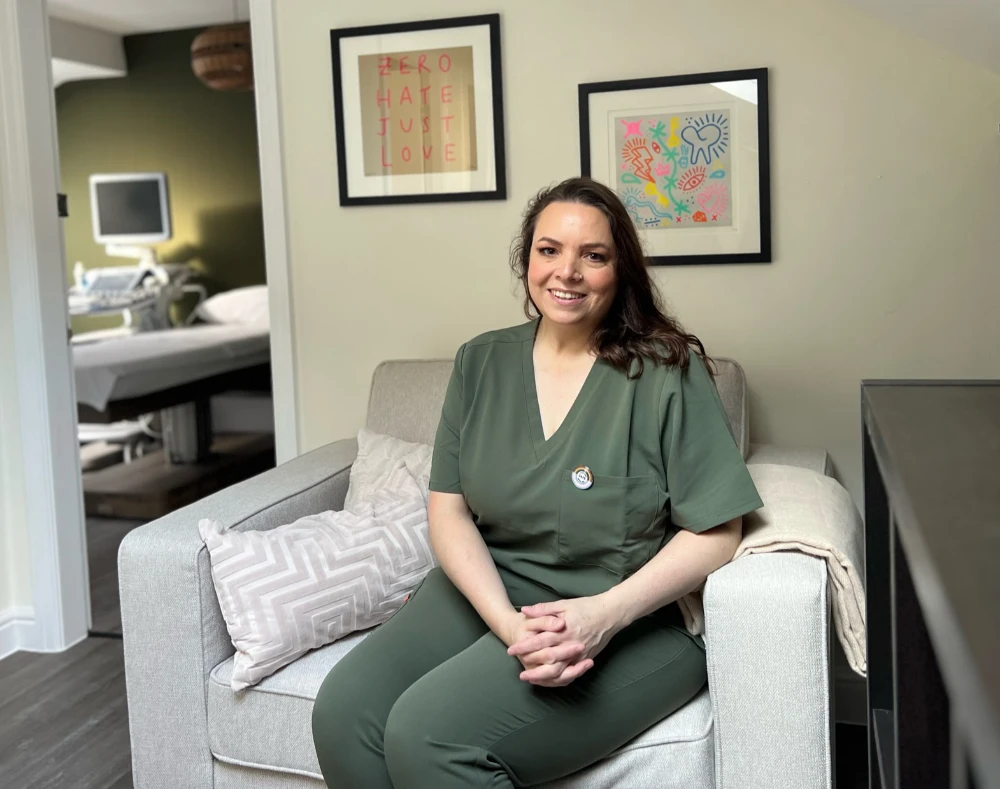
Kate Mortimer, Lead Midwife at Cocoon Healthcare, said:
Pregnancy creates enormous physical, hormonal, emotional and sensory change, and for neurodivergent women that can sometimes feel completely overwhelming. We need to stop expecting every woman to process pregnancy, communicate pain, cope with uncertainty or experience motherhood in exactly the same way.
Neurodivergent women deserve space to explain what they need without feeling difficult, dramatic or irrational. Sometimes seemingly small adaptations, whether that’s changing how we communicate pain, preparing carefully for different scenarios, or simply giving someone more time to process what is happening, can completely transform how safe and empowered they feel.
Ella’s experience demonstrates why adaptive maternity care matters. We cannot remove every uncertainty from pregnancy, but we can give women the knowledge, language and confidence to understand their needs, communicate them and advocate for themselves.
Ella is sharing her experience as part of a new awareness drive from Cocoon Healthcare, highlighting neurodivergent experiences of pregnancy and motherhood and calling for greater recognition of individualised, adaptive maternity care.
Cocoon Healthcare provides pregnancy scans and one-to-one midwifery support from its Yorkshire clinic, whilst also offering virtual support to women and families across the UK.