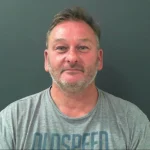
Tom Gordon MP, Liberal Democrat Member of Parliament for Harrogate and Knaresborough, had secured a Westminster Hall debate on home to school transport, that debate took place today.
The debate focused on recent changes to home to school transport provision, including the impact on families across North Yorkshire and the growing concerns raised by parents, carers, and schools about accessibility, eligibility, and affordability.
Tom said:
We were grateful to be joined by our colleagues in North Yorkshire, including the former Prime Minster Rishi Sunak and am glad that they added their voices to encourage policy making that takes our unique geography into account.
Tom Gordon’s speech
Thank you [NAME], it is a pleasure to serve under your chairship. I am grateful to have secured this important debate.
Home-to-school transport is, at its core, a simple promise: that where a child cannot reasonably walk to school, transport will not be a barrier to their education. That promise is under serious strain. Across the country, and acutely in my constituency of Harrogate and Knaresborough, families are finding that promise broken, by policy changes that are short-sighted, poorly designed, and in many cases deeply unfair.
The national picture is stark. The Public Accounts Committee published its report on home-to-school transport in March this year, and its conclusions make for uncomfortable reading. Local authorities in England spent £2.6 billion on home-to-school transport in 2024-25, a real-terms increase of 70% since 2015-16. SEND transport alone has more than doubled in cost over that same period and now accounts for £2 billion of that total. These are enormous sums. But the PAC found, remarkably, that the Department for Education does not know whether this spending is achieving value for money. It does not have the data it needs to oversee the system effectively. It cannot adequately measure the relationship between transport and school attendance.
The consequences of that failure are visible in other figures. Almost one million young people in the UK are not in education, employment or training. One in five children of compulsory school age misses at least a day of school per fortnight, and that rises to one in three at sixth form age. The Department’s own assessment looks only at transport disruptions on the day they occur, not at the wider question of whether the system is keeping children in school at all. That is a serious blind spot, and one the Government needs to address.
This is not just a North Yorkshire problem. The County Councils Network has warned that three-quarters of councils expect to tighten mainstream transport eligibility in the coming years. What is happening in my constituency today is a preview of what families across rural England will face if this direction of travel is not reversed.
Nowhere is this picture more acute than in North Yorkshire, and that is why I secured this debate today.
At the heart of the problem is a growing disconnect between two systems that are supposed to work together but increasingly do not. We have a school admissions system built around catchment areas and feeder-school relationships, and a home-to-school transport framework that is being interpreted ever more narrowly as “nearest school only.” For many years, county councils bridged that gap pragmatically by offering transport to the nearest or catchment school. That reflected the realities of rural England, where many children live well beyond walking distance, public transport is sparse or non-existent, and the geography means the nearest school on a map is often not the most practical school to reach. Sometimes because there is a mountain in the way. Sometimes a river crossing. Sometimes simply a county boundary that bears no relation to how communities actually function.
But as budgets tighten and authorities retreat toward statutory minimum provision, councils are removing catchment transport and reverting to nearest school only. In rural areas like North Yorkshire, the consequences are severe, and they are being felt right now.
Within days of being elected, home-to-school transport was landing in my inbox. It has not stopped since. North Yorkshire Council changed its transport policy to base eligibility on the nearest school only, rather than the nearest or catchment school. The council says this is necessary to address rising costs, which have now exceeded £52 million, one of the three largest areas of its spending, with unsubstantiated claims of savings of up to £3 million over seven years.
I understand budget pressure. I understand that local authorities are being squeezed from every direction. But understanding a pressure does not mean accepting the response to it uncritically, and this policy is not working.
The system North Yorkshire Council uses to calculate the “nearest school” is not publicly available. Families receive decisions with no ability to interrogate the methodology behind them. That opacity alone is a problem, but when we look at what that methodology is actually producing, it becomes something worse than opaque. It becomes absurd.
The council measures distance using the “shortest available walked route” to school. That sounds reasonable until you see what it counts as a walked route. Riverside paths. Farm tracks. Roads with no pavements. Cliffside grass tracks. Hiking paths over Dales. Campaigners have discovered that the council’s mapping tool includes a private farm track and a ford crossing of a river as an available walking route to school. A ford that is, in reality, only passable by tractor. A route on private land. One family successfully appealed against the use of this route, and yet it remains on the council’s mapping system, ready to be used again. STAG has documented routes that expect children to climb over metal barriers on the A64, and paths that cross an active military firing range. I would be very interested to hear the Minister’s view on whether any of this constitutes, in the council’s own words, a “nearest available walked route.”
STAG, which was formed to fight these changes, has done determined and important work in documenting the human cost of this policy, and I want to pay particular tribute to Jo Foster, whose campaigning on this issue has been tireless and has helped bring it to the national attention it deserves. STAG puts the situation plainly: “North Yorkshire Council has lost the plot on home to school transport.” I am inclined to agree.
More than 1,000 families have been affected. There have been more than 200 appeals and at least 20 ombudsman cases in 2025 alone. A senior councillor who voted for this very policy has publicly admitted it contains “errors” and that some families have been left as “losers.” That is not a rounding error. That is a policy failure.
STAG has just completed a survey of families going through this process right now, the class of 2026. They have 60 responses so far, and the findings are telling. Nearly 59% applied to a school because it was their catchment school, and more than a third have siblings already there. 84% live in towns or villages that already have a school bus going to their chosen catchment school. Despite that, 73% will not be eligible for free transport.
Nearly two-thirds of those families have no back-up plan at all. Some have told STAG what their options look like in practice. One parent said: “My back-up plan is to leave my job so I can drive my child to school.” Another: “We would have to consider driving, but we both travel with work and it wouldn’t allow us to do our current jobs.” A single parent wrote: “I would not be able to work. I am a single parent household.” And one parent captured the particular absurdity of sibling cases: “I shall have to take extra overtime at work in order to pay for my second child to sit on a bus that my eldest child is already on.”
Those families who do plan to buy a paid-for bus pass face a further cruelty: those passes will not be confirmed until August, will be subject to availability, can be withdrawn at one week’s notice, and the council has made clear its intention to phase out catchment routes entirely as soon as possible. Families are being asked to plan their working lives around a service that may not exist by the time their child starts secondary school.
These are not edge cases. They are the predictable and documented consequences of a policy that has stripped the transport system away from the admissions system it is supposed to support.
And the costs have not disappeared. They have simply been transferred, from the council onto rural families who can least afford them.
Council officers have described the changes as ensuring “fairness and consistency.” I want to put some individual stories on the record today, and let Members judge for themselves.
Leanne lives in a village outside Harrogate. Her daughter has been waiting three-and-a-half years for a diagnosis, is on the SEN register, and has a PDA profile with emotional-based school avoidance. There is no public bus through the village. There is no safe walking route. Leanne’s other child has Down syndrome, an EHCP, and cannot travel to school safely alone, and both children need to be at school at the same time. Leanne and her husband both work full time. Under the new policy, they have been denied free transport to the nearest suitable school, and are now paying £94 a month for a bus permit. She told me: “The system is broken and does not take into account personal circumstances or rural villages’ needs.” I agree with her entirely.
David lives in Upper Wharfedale. Every morning, he drives in convoy with his neighbours, following the school bus past his house, because his neighbours qualified under the old policy and he did not. The bus goes to Kettlewell Primary – the only school anyone in his local area has attended for sixty years, along the only safe route available. North Yorkshire Council now says his children’s nearest school is Hawes, in Wensleydale. To get there, they would have to cross Fleet Moss, one of the highest and most remote routes in the country, treacherous in winter and frequently impassable. When David and his family moved to the Dales five years ago to run a farm diversification scheme, they would never have come if this policy had been in place. He has told me it will be “the death of these communities, and that’s not hyperbole.” I believe him.
Sophie, a friend I went to high school and college with, lives in one of the villages straddling multiple local authority boundaries – Doncaster postcode, North Yorkshire Council, East Yorkshire postal address, West Yorkshire phone number. Her children’s primary school cohort has now been scattered across four secondary schools in four different authorities in four different directions. She made the point with characteristic directness: it cannot possibly be more cost-effective to fund transport to four separate schools in four separate directions than it would have been to fund one bus to one school. The policy is not just unfair to families. It is not even achieving what it claims to achieve.
There is also a wider consequence that is not often discussed. One in four small primary schools in North Yorkshire stand to lose pupils because of this policy. Small secondary schools in Settle, Whitby, and Boroughbridge face an existential threat. When we hollow out the transport routes that sustain these schools, we do not just inconvenience families. We undermine the schools themselves, and with them the rural communities they serve.
I also want to raise the situation facing SEND families specifically, and the additional injustice of the cliff edge at sixteen.
I want to tell the House about Noah, whose mother Catherine has shared his story with me.
Noah deferred starting primary school by a year because he was unable to walk. After winning an appeal to attend St John’s, North Yorkshire Council offset that deferred year and placed him in Year 8. The consequence, and I want the House to sit with this for a moment, is that Noah will receive one fewer year of education than his peers. And because his free transport entitlement ends at sixteen, he will receive only four years of free transport rather than five. He has already had more taken from him than other children through no fault of his own, and the system’s response is to take still more.
Noah cannot walk independently and requires one-to-one support. Yet his taxi to school has become the highlight of his day, because it is the one moment where he is not dependent on his mother, where he has something that feels like freedom. His family has one income coming in. They claim Universal Credit. They have little to no savings. They cannot find £66 a month to pay for transport. And when Noah turns eighteen, the assumption is that because the family has a Motability vehicle, Catherine will drive him, stripping away once again the independence that took so long to build.
This is not a bureaucratic edge case. It is what the system does to families like Noah’s, systematically and without apology.
This is not an isolated experience. The Public Accounts Committee found that 40% of families of young people with SEND said they had had to give up work because transport provision ended when their child turned sixteen. Colleges report students failing to start courses because transport has not been agreed. I believe just across the council border in Leeds, the Local Government and Social Care Ombudsman has already found the council at fault for its approach to post-sixteen SEND transport, identifying both individual injustice and systemic failure. Yet families continue to report inconsistent decisions, inadequate assessments, and personal travel allowances that do not cover their actual costs.
The charity Contact put it clearly in evidence to the PAC: post-sixteen, the policy is simply not working. The change in entitlement can feel like a cliff edge. And for families who have spent years building routines and support around a young person with complex needs, that cliff edge can be devastating, for the young person, and for every member of the family around them.
We cannot have a system that claims to support inclusion and participation, while simultaneously pulling the transport that makes participation possible.
I want to press the Minister on a number of specific points.
The single most impactful and achievable change the Government could make is also the simplest. The statutory guidance on home-to-school transport should be updated so that the minimum provision becomes the nearest or catchment school, rather than solely the nearest suitable school. That one change would restore the alignment between admissions and transport that rural families depend on. It would give councils a clear framework and remove the incentive to reinterpret eligibility ever more narrowly. It would protect the community-school relationships that anchor rural life. And it would not require primary legislation. I would urge the Minister to give that serious consideration.
Secondly, I urge the Minister to impress upon her colleagues at MHCLG the need to reinstate the Rural Services Delivery Grant. The rural premium matters enormously for authorities like North Yorkshire, where distances are not a policy choice but a geographical fact. Cutting that grant has real consequences for the decisions councils make, and those consequences are being borne by families in villages across the Dales and across Harrogate and Knaresborough who can least afford them.
Thirdly, will the Government look seriously at expanding the statutory minimum more broadly? The current system, a two-mile walking distance for primary, three miles for secondary, and a duty that ends at sixteen, was designed for a different era and a different pattern of schooling. Where school systems have been reorganised, where specialist provision has been concentrated, where rural bus networks have been allowed to decline, the statutory floor is no longer fit for purpose.
Fourthly, will the Minister confirm that the Government will make data collection on home-to-school transport mandatory, as the PAC recommended? We cannot improve what we do not measure. Voluntary, inconsistent data collection across 150 local authorities is not a sufficient basis on which to run a £2.6 billion system. The Department needs a proper baseline if it is ever going to hold local authorities to account and drive genuine improvement.
Home-to-school transport is not a niche issue. It sits at the intersection of SEND policy, rural sustainability, school attendance, the cost of living, and the long-term viability of rural communities. School buses are not a luxury in rural England. They are essential infrastructure.
Families across rural communities like those in North Yorkshire are not asking for special treatment. They are asking for a system that works, one that keeps their children safe, keeps them in school, and does not price them out of the education they are legally entitled to. There should not be a rural tax on education. That is not too much to ask. I hope the Minister agrees.