Review by Tim Harrison
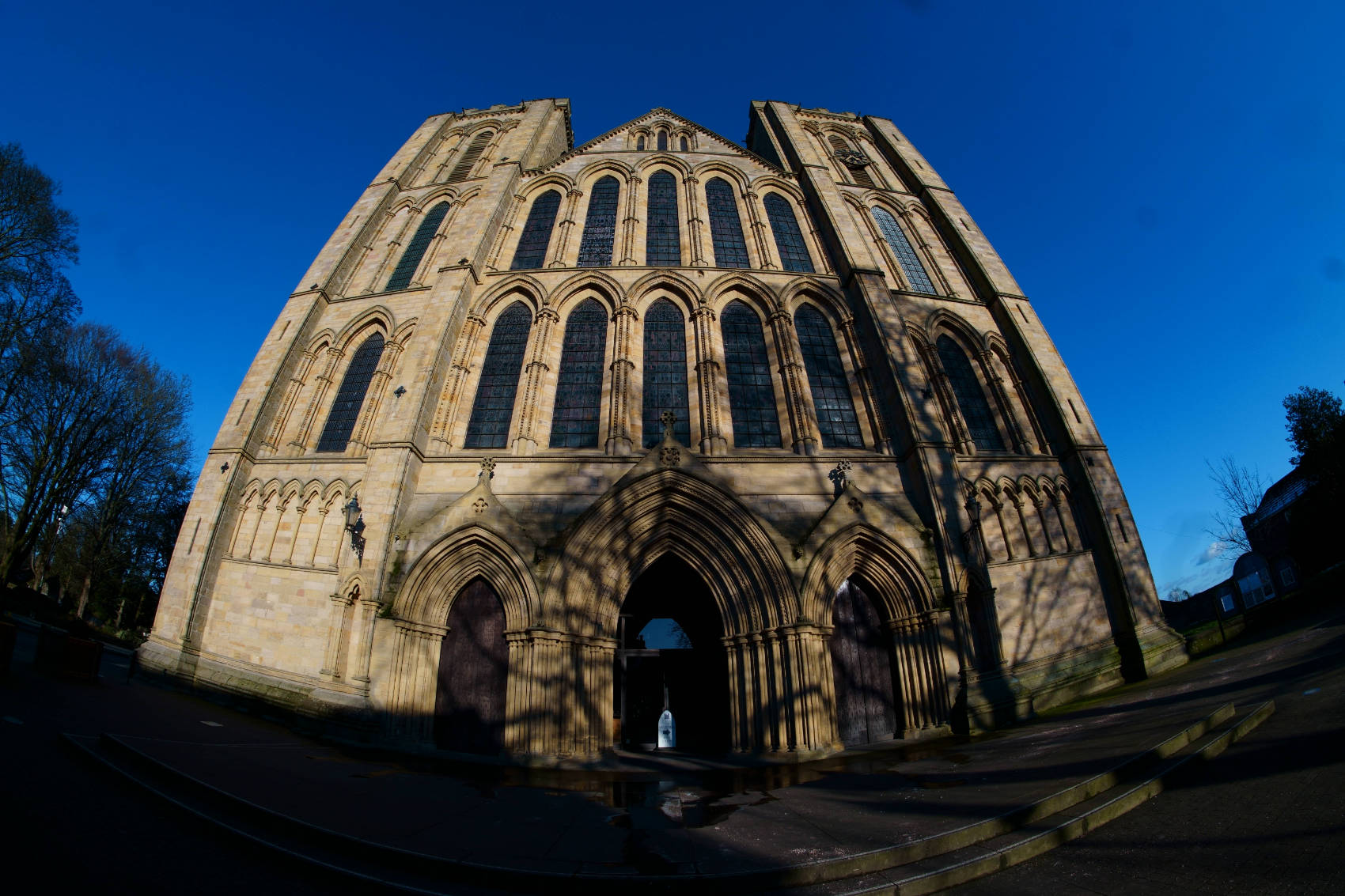
Saturday 25th April, and a buzz of excitement was in the air as a large audience gathered in Ripon Cathedral for Great Romantics. Given by the St Cecilia Orchestra under their conductor Xenophon Kelsey, this concert featured three towering masterpieces of nineteenth century European music. Weber’s overture Oberon was composed as an opening flourish to his eponymous opera and has become a perennial favourite of orchestral repertoire since its premiere at Covent Garden in 1827.
The lyrical slow opening solo horn melody was beautifully rendered; accompanied by a warm string sonority with delicate woodwind and brass playing it conjured a spirit of magic and mystery. The dramatic Allegro is full of dynamic contrast, the music frequently rising from pianissimo to fortissimo within a mere two bars whilst its scurrying string writing and punchy wind chords anticipate Mendelssohn’s overture A Midsummer Night’s Dream composed soon after. The Cathedral is a challenging acoustic for orchestral music, and this glittering string playing which needs absolute clarity for its brilliance to shine was unfortunately occasionally clouded by the weight of the brass.
No such balance problems hampered Brahms’s Double Concerto, in which the orchestra was joined by renowned soloists Jack Liebeck (violin) and Tim Lowe (cello) for a thrilling performance. The powerful opening 4 bar orchestral tutti, dramatically interrupted by a forceful solo cello cadenza, contrasted superbly with the gentle woodwind link and tender violin solo that followed. The soloists wowed the audience as motifs passed from player to player in an exciting crescendo to the explosive fortissimo full orchestral exposition. Amongst so much brilliant playing I must mention in particular Tim Lowe’s utterly soulful rendition of the exquisite 2nd subject.
For my taste the opening of the 2nd movement needed a little more space to breathe: this great “prayer” is marked Andante (“walking pace”), an expression open to broad interpretation. Tonight’s soloists were young men, but Brahms in 1887 was not; his morning stroll around the park was presumably somewhat steady like my own! Otherwise tempi were well judged and orchestra and soloists were entirely in accord throughout. The finale was nicely paced so that the soloists’ flurry of demisemiquavers towards the end were crystal clear.
One work followed the interval: Dvorak’s mighty 7th Symphony. Receiving its premiere in London in 1885 conducted by the composer it is perhaps the most “Brahmsian” of Dvorak’s symphonies; and yet even its most overtly Brahmsian gestures are made fresh by the stamp of Dvorak’s highly original genius. Right from the start one felt that the orchestra, admirably led by Richard Fletcher, had this challenging work at its fingertips. A vibrant performance followed with many notable highlights such as the fine brass playing at the end of movement1, the exquisite horn and woodwind solos, and heart-rending tutti cello in movement 2, not to mention some particularly stirring timpani playing in the finale which brought the evening to a triumphant close.