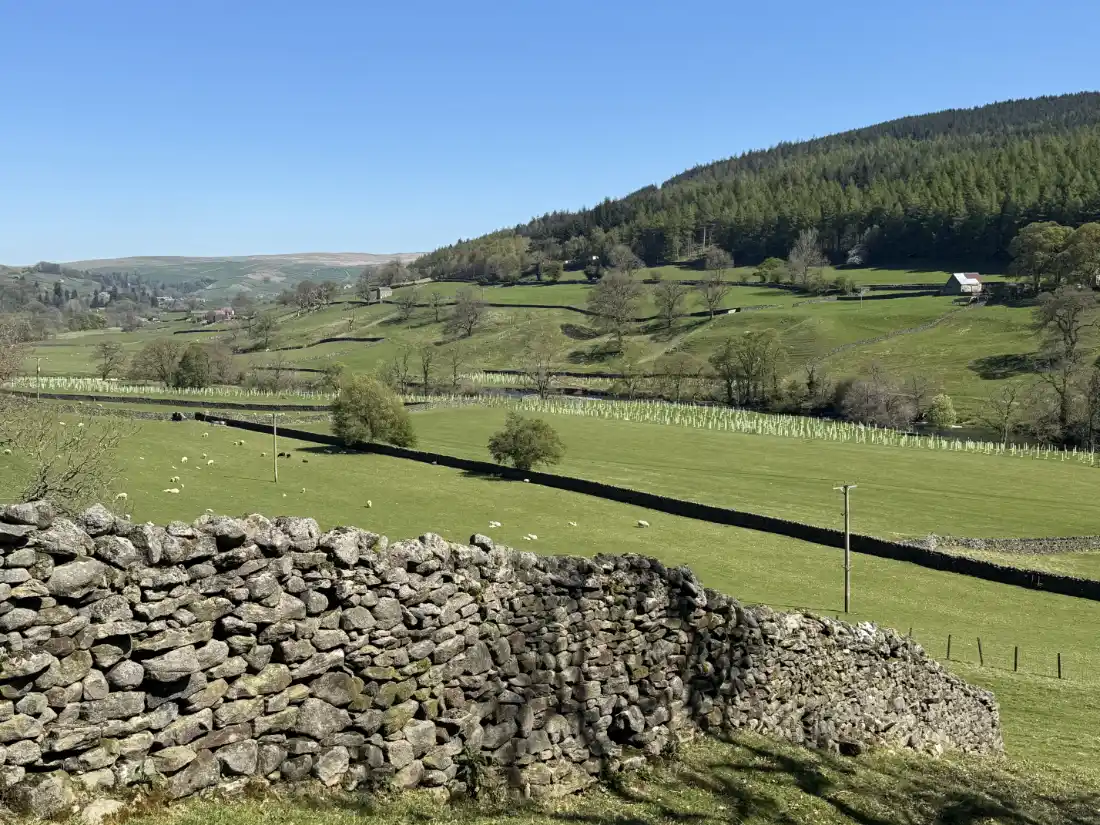
Bolton Abbey has announced the next steps of its major forestry project, which will see a total of 80,000 trees planted across 90 hectares of the estate as part of its broader commitment to environmental stewardship and biodiversity.
The ambitious initiative began last year with thousands of trees planted in the first phase of a multi-year woodland creation programme designed to increase habitat, slow water runoff, sequester carbon, and support wildlife corridors across the 30,000-acre estate in the Yorkshire Dales.
The second phase, which started in February, will see more than 10,000 trees being planted and will be particularly noticeable to visitors along the banks of the River Wharfe. This will help stabilise riverbanks, reduce sediment and nitrate runoff, prevent livestock entering the water, and create shaded areas for aquatic wildlife. The new planting will also strengthen wildlife corridors running through the estate.
The newly planted areas include four woodland types – riparian woodlands along watercourses, high-canopy woods, native scrubland, and open glades – reflecting the natural features of the landscape.
While the majority of species are native broadleaf varieties such as oak, birch, willow, hornbeam and lime, a small proportion of climatically resilient trees are being introduced to help future-proof the woodland. All trees are sourced from UK nurseries and planted using sheep wool matting.
Head Forester at Bolton Abbey, John Everitt, said:
We’re not just planting trees – we’re designing living systems that will shape this landscape for generations to come. Every choice we’re making, from species selection to siting and land use, is part of a long-term vision to restore biodiversity, manage water, and adapt to a changing climate.
This project is about building connections between people, wildlife, water, and the wider environment. By involving the next generation, we’re ensuring these new woodlands are not only planted but also understood, valued, and cared for long into the future.
Backed by funding through the government-led Northern Forest scheme, the project reflects a significant step forward in Bolton Abbey’s long-term commitment to landscape regeneration and forms part of a wider vision mapped across Bolton Abbey.
Alongside new planting, the team is restoring historic field boundaries, replanting lost hedgerows, and reviving individual ‘landscape trees’ that once gave character to the countryside but have been lost through age or changing agricultural practices.
On Banks Farm, 2km of hedging has been reinstated, enhancing biodiversity and reconnecting fragmented habitats. In total, over 200 field trees have been identified for planting in the coming years, with native and fruiting species included to support pollinators and wildlife.
Estate Manager at Bolton Abbey, David Barrett, said:
Bolton Abbey has always been a special place in the Yorkshire landscape, and for generations it has provided a sanctuary for both people and wildlife. This project is about making sure that continues for the future.
It began with a realisation about the River Wharfe and just how important trees are in protecting its water quality. Seeing the difference they make to the health of the river and the surrounding landscape really brought home what could be achieved here. Over the past six years, we have worked to turn that understanding into something lasting.
By investing in woodland creation at this scale, we are helping to protect and strengthen the landscape, creating habitats that will thrive for generations to come. It is something I am incredibly proud to see coming to life, and I hope it will stand as a lasting legacy for everyone who lives, works, or visits here.
The project complements other major conservation initiatives already in place on the estate, including bioacoustic monitoring, peatland restoration, and the protection of endangered wading birds such as the curlew.